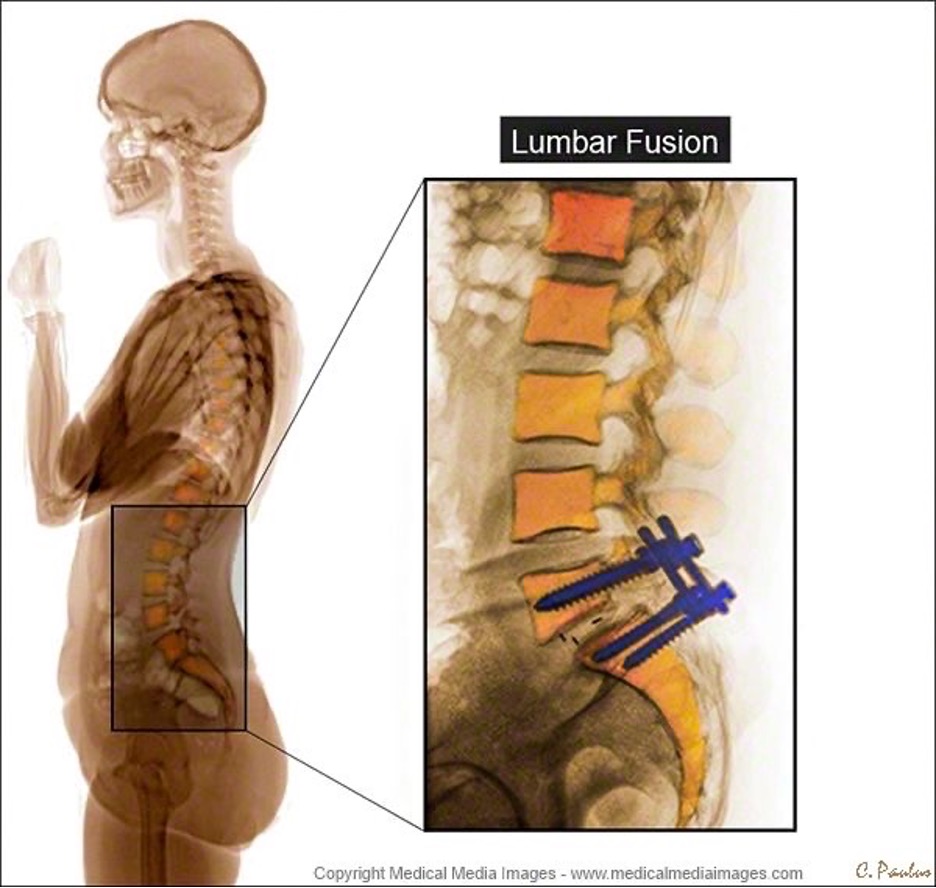
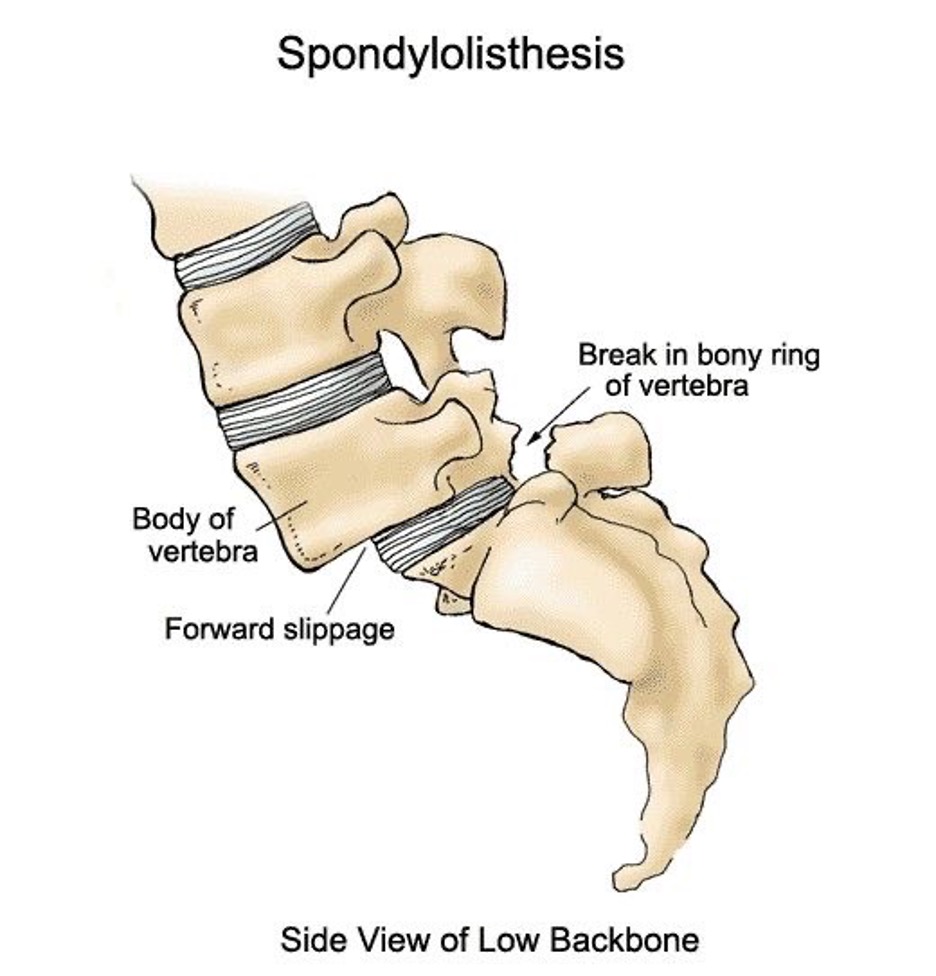
Lumbar spondylolisthesis occurs when the spinal vertebra on top slips forward relative to the one below it. It can be caused by arthritis of the spine in which case it is often referred to as lumbar degenerative spondylolisthesis. Sometimes it can be caused by trauma, in which case it is often referred to as traumatic spondylolisthesis.
SYMPTOMS OF LUMBAR SPONDYLOLISTHESIS
The symptoms of lumbar spondylolisthesis include back pain, pain shooting down the leg, tinging or numbness in the legs. If a nerve in the spine is pinched, then the leg can become weak.
DIAGNOSIS OF LUMBAR SPONDYLOLISTHESIS
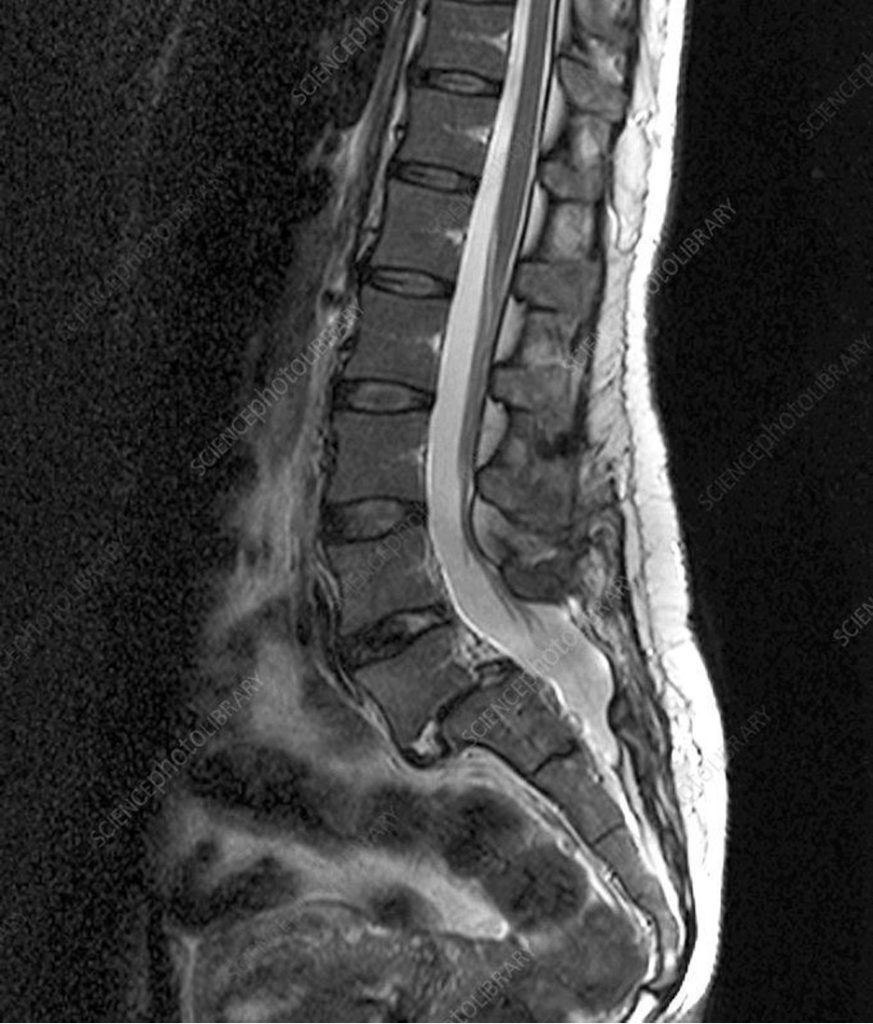
Lumbar spondylolisthesis is usually diagnosed after your neurosurgeon sees you and does a history and physical examination. Your neurosurgeon might then order an MRI of the lumbar spine or CT scan of the lumbar spine. Sometimes a Flexion/Extension Lumbar spine X-ray is also ordered. This is an X-ray that is performed when you bend forward and backwards to see if the spine bones are moving abnormally.
TREATMENT FOR LUMBAR SPONDYLOLISTHESIS
Some people who have lumbar spondylolisthesis may not require any treatment if the condition is not causing too much discomfort, loss of function or affecting their daily lives.
NON SURGICAL TREATMENT FOR LUMBAR SPONDYLOLITHESIS
Non surgical treatment for lumbar spondylolisthesis is geared toward easing the pain an discomfort the condition might be causing. Some o the treatments include medications for he discomfort, physical therapy or epidural steroid injections.
SURGICAL TREATMENT FOR LUMBAR SPONDYLOLISTHESIS
The surgery for Lumbar spondylolisthesis usually a lumbar fusion. During this surgery your neurosurgeon usually stabilizes the spine using screws and bone graft. Sometimes a laminectomy is done to free the nerves. During a laminectomy the back part of the spine, called the lamina is roomed and more room is created for the nerves involves Lumbar decompressive laminectomy with posterolateral fusion.