

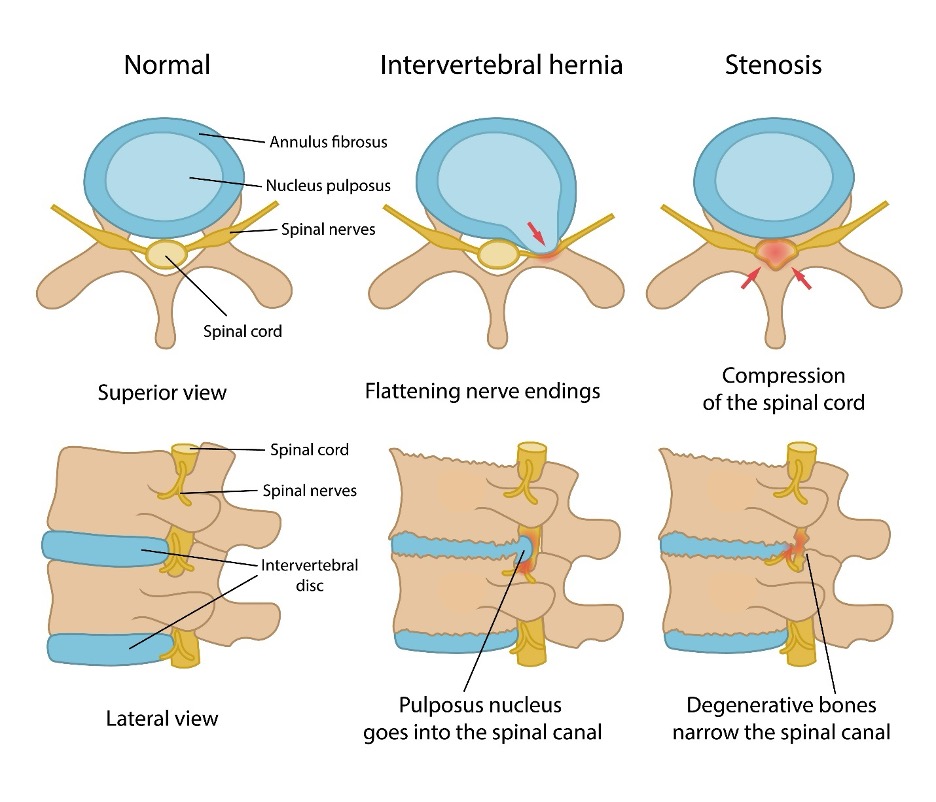
Spinal stenosis occurs when the space in the spine known as the spinal canal becomes narrowed. Narrowing can occur due to arthritis of the spine and can also occur naturally as we age.
SYMPTOMS OF CERVICAL SPINAL STENOSIS
When the spinal canal is narrowed in the neck the nerves can become trapped or pinched resulting in neck pain, arm pain, tingling, numbness or weakness of the arms.
DIAGNOSIS OF CERVICAL SPINAL STENOSIS
Your neurosurgeon usually performs a history and physical examination to determine if the symptoms you are having is likely from cervical spinal stenosis. After the history and physical examination, your neurosurgeon may order x-ray, of the cervical spine, CT scan of the cervical spine, MRI of the cervical spine or CT/Myelogram of the cervical pine to help make the diagnosis.
NON SURGICAL TREATMENT FOR CERVICAL SPINAL STENOSIS
Non surgical treatment for cervical spinal stenosis may include medications for the pain, physical therapy, and/or epidural steroid injections.
SURGICAL TREATMENT FOR CERVICAL SPINAL STENOSIS
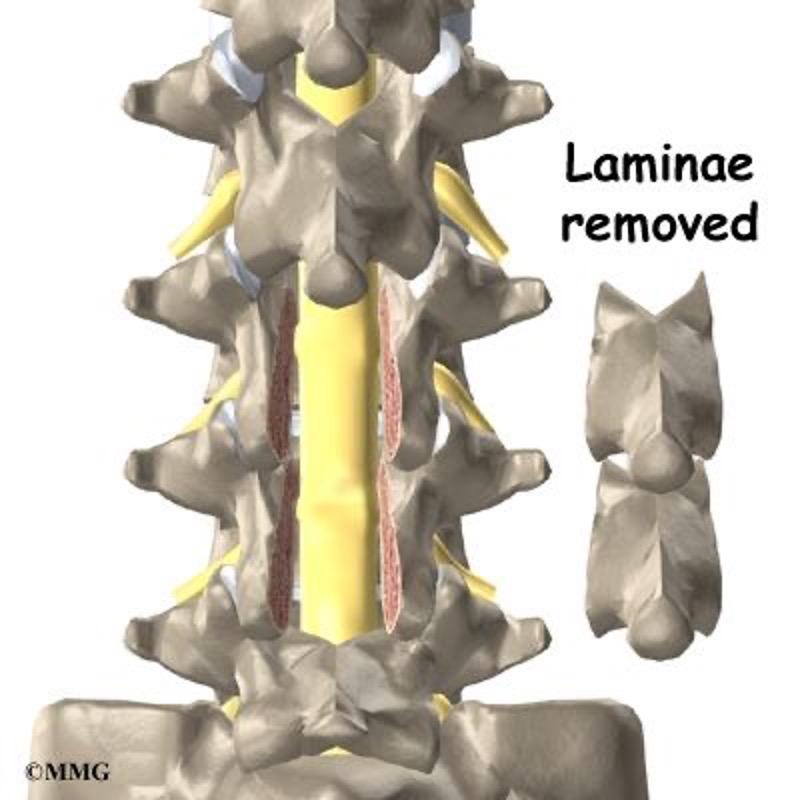
The surgery for cervical spinal stenosis is usually posterior cervical decompressive laminectomy. During this procedure your neurosurgeon removes he back part of the spine and creates more room for the nerves. Sometimes your neurosurgeon may place small screws and a bone graft in the back of the spine to stabilize the spine. When this is done it is called posterior cervical decompressive laminectomy and fusion.