LUMBAR SPINAL STENOSIS
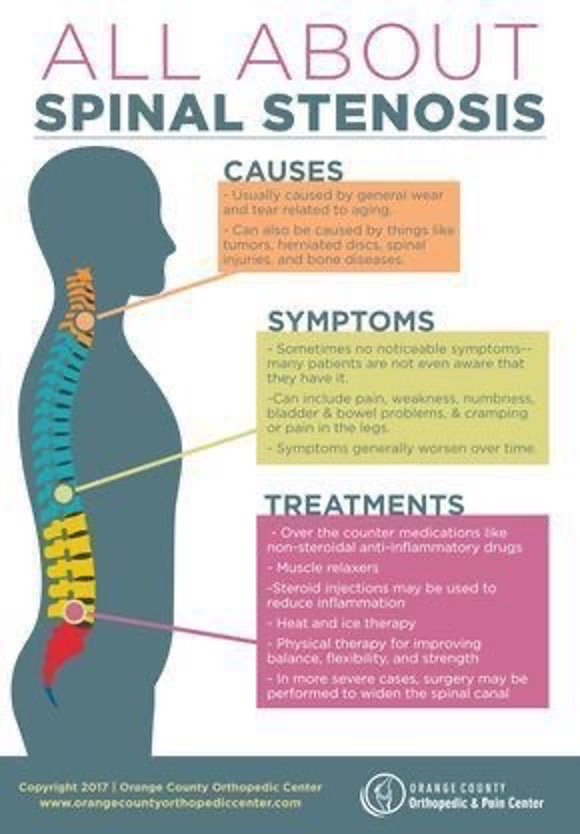
Spinal Stenosis can occur anywhere along the spine. When it occurs I the lower back portion of the spine, it is called Lumbar spinal stenosis. Spinal stenosis occurs when the spinal canal, the space through which the nerves travel, becomes too narrow and pinches the nerves.
SYMPTOMS OF LUMBAR SPINAL STENOSIS
The usual symptoms of lumbar spinal stenosis include back pain, pain tingling and numbness down the legs. Sometimes there is heaviness or tiredness of the legs when walking. This is sometimes referred to as pseudoclaudication or neurogenic claudication.

DIAGNOSIS OF LUMBAR SPINAL STENOSIS
Lumbar stenosis is usually diagnosed after your neurosurgeon performs a history and physical examination and orders a diagnostic test. The more common tests that are ordered include MRI of the lumbar spine or CT scan of the lumbar spine.
TREATMENT FOR LUMBAR STENOSIS
The treatment for lumbar spinal stenosis can be surgical or non surgical.
NON SURGICAL
Not everyone that has lumbar stenosis has to have surgery. Non surgical treatment for Lumbar spinal stenosis include physical therapy and epidural steroid injections.
SURGICAL TREATMENT FOR LUMBAR SPINAL STENOSIS
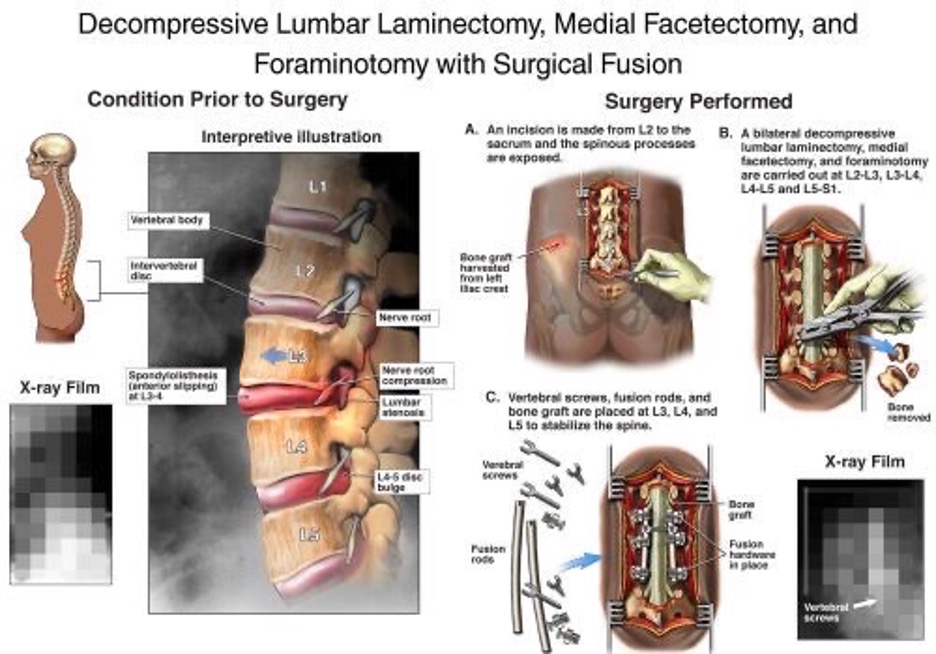
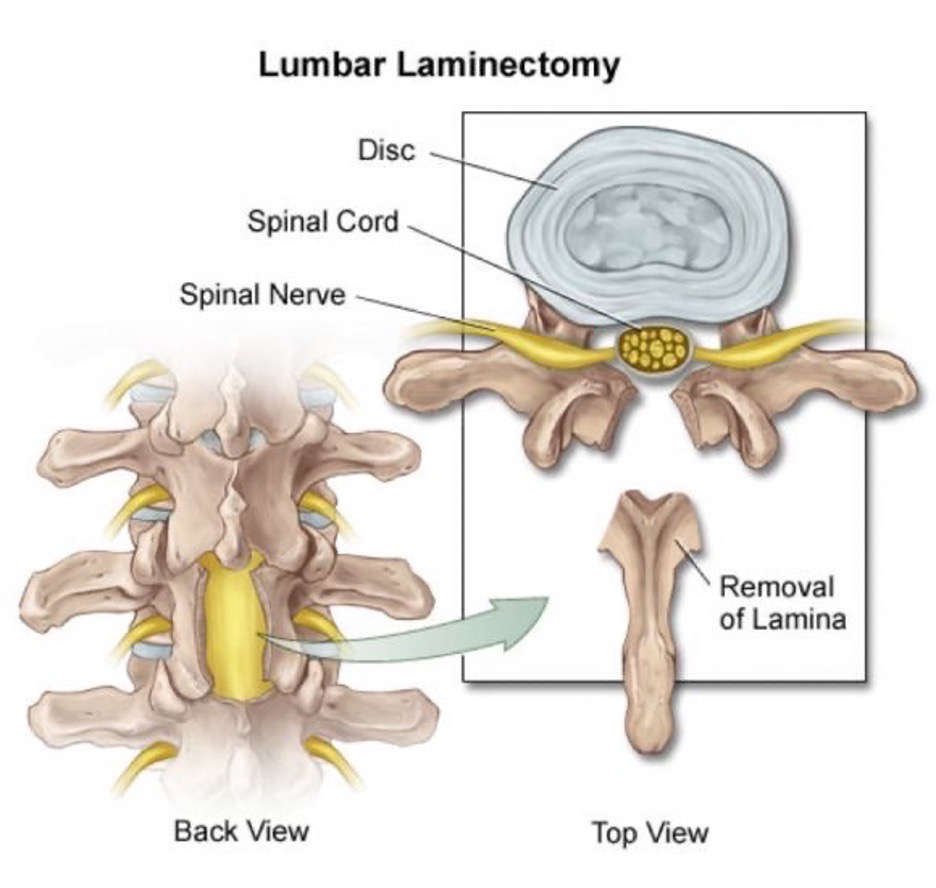
Surgical treatment for lumbar spinal stenosis is usually Lumbar decompressive laminectomy. During this surgery your neurosurgeon removes the back part of the spine called the lamina and creates more room for the nerves.
Sometimes in addition to the decompressive laminetomy, your neurosurgeon may also perform a spinal fusion to stabilize the spine.